Signs You May Have Wildlife Living in Your Attic or Crawl Space
Hearing an unexplained scratching sound above the ceiling or beneath the floor can be unsettling. Sometimes the cause is simple, but other times those sounds can indicate that wildlife has found its way into an attic, crawl space, or another protected area of the home.
Homes throughout Chatham County and Lee County are surrounded by a mix of wooded areas, open land, established neighborhoods, and growing communities. That means encounters with wildlife are a normal part of living in this part of North Carolina. Problems can develop, however, when an animal begins using part of your home for shelter.
Wildlife activity is not always obvious at first. Animals may enter through vulnerable areas and remain out of sight, leaving homeowners to discover noises, droppings, damaged materials, or other clues.
Elmore Pest & Mosquito Control provides residential wildlife control backed by more than 36 years of pest control industry experience. Vernon Elmore is also a North Carolina Certified Wildlife Control Agent. If you suspect an unwanted animal has entered your home, recognizing the following warning signs can help you decide when it is time for a professional inspection.
1. Scratching, Scurrying, or Movement Sounds
Unexplained noises are among the first signs homeowners may notice.
Scratching, scurrying, rustling, or movement can sometimes be heard from the attic, crawl space, walls, ceiling, or other concealed areas. The timing and location of these noises can provide useful information during an inspection.
Do not assume that every noise indicates the same animal. Different pests and wildlife can enter homes, and sounds alone may not provide enough information for accurate identification.
If the noises continue, become more frequent, or are accompanied by other signs of activity, having the property inspected is a sensible next step.
2. Droppings in or Around the Home
Droppings are another indication that an animal or pest may be spending time in an area of your home.
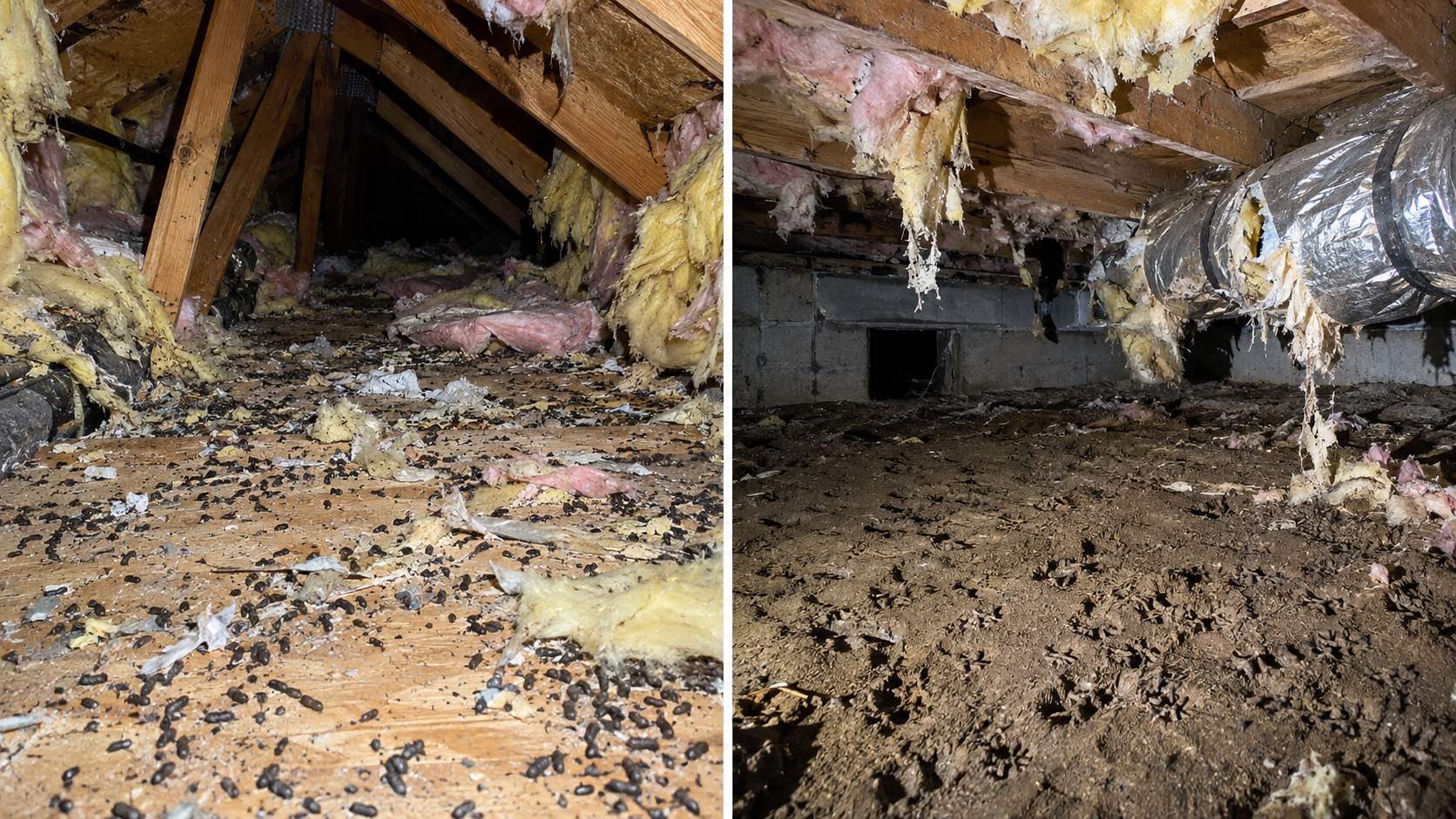
Homeowners may discover them in an attic, crawl space, garage, storage area, or near a possible entry point. The appearance and location of droppings can sometimes help a trained professional determine what type of animal may be involved.
Avoid handling unknown animal waste unnecessarily. Instead, make note of where you found it and have the area evaluated.
Finding droppings also makes it important to look beyond the visible evidence. The larger question is how the animal entered the structure and whether activity is continuing.
3. Unusual Noises at Certain Times of Day
Pay attention to when you hear activity.
Some animals are more active at night, while others may move around during daylight hours. If noises occur repeatedly at approximately the same time or in the same portion of the home, that information can be helpful when evaluating the situation.
For example, you might hear movement above a bedroom at night or scratching beneath a floor early in the morning.
Write down where and when you hear the sounds. These details can help provide a clearer picture when a wildlife control professional arrives to inspect the property.
4. Disturbed or Damaged Insulation
Insulation can provide clues about wildlife activity, particularly in attics and crawl spaces.
If insulation appears compressed, displaced, torn, or otherwise disturbed, something may have been moving through the area. Nesting activity can also affect insulation and other materials.
However, damaged insulation does not automatically mean wildlife is responsible. Age, moisture, previous repairs, pest activity, and other conditions can also affect insulation.
Elmore Pest & Mosquito Control offers both wildlife control and insulation services, allowing us to evaluate what is happening rather than automatically assuming one cause.
5. Visible Openings Around the Structure
Animals need a way to get inside.
Potential entry areas can develop around different portions of a home, particularly where building materials meet or where an existing opening provides access to a protected space.
Homeowners can periodically walk around their property and look for visible changes, damaged materials, gaps, or openings that seem unusual.
That does not mean you should immediately seal every opening you find when wildlife activity is suspected. If an animal is already inside, closing an opening without understanding the situation can create additional problems.
Identification should come before deciding how the access point should be addressed.
6. Nesting Materials or Unusual Debris
Finding leaves, paper, insulation, twigs, or other materials gathered together in an unexpected place may indicate nesting activity.
This is especially relevant when the materials appear in an attic, crawl space, garage, or another protected location.
Like many wildlife warning signs, nesting material should be considered together with other evidence. Droppings, sounds, disturbed insulation, tracks, odors, and visible entry points may help provide additional clues.
A thorough inspection can help determine whether the material is associated with current activity or something from the past.
7. Unexplained or Persistent Odors
An unusual odor that seems to come from an attic, crawl space, wall, or other hidden area should not automatically be blamed on wildlife. Moisture, plumbing, mold, pests, and other property conditions can also produce odors.
However, wildlife activity is one possible cause.
If an odor appears along with scratching sounds, droppings, nesting materials, or other signs, a professional inspection can help identify the source.
This is another reason a comprehensive evaluation is preferable to guessing based on a single symptom.
Why Attics and Crawl Spaces Attract Wildlife
Attics and crawl spaces offer something many animals naturally seek: protection.
An attic may provide a dry, relatively undisturbed area away from weather and predators. A crawl space can offer similar shelter, particularly if an accessible opening allows an animal to enter.
These parts of a home also receive less everyday attention than kitchens, living rooms, and bedrooms. Wildlife activity can therefore continue for some time before a homeowner realizes something is wrong.
Regularly monitoring these spaces and paying attention to changes around the exterior can help you recognize a potential issue earlier.
What Should You Do If You Suspect Wildlife?
The first step is to avoid making assumptions about the animal or immediately attempting to close its entry point.
Instead, note the evidence you have observed. Where are you hearing sounds? When do they occur? Have you found droppings? Is insulation disturbed? Have you noticed an opening around the exterior?
Then schedule an inspection.
Wildlife situations can vary significantly from one property to another. Proper identification helps determine the appropriate approach for the particular animal and circumstances involved.
Why Professional Wildlife Identification Matters
Online photos and videos can make wildlife identification seem straightforward, but real situations are often more complicated.
A sound in the attic may not come from the animal you expect. Droppings can be misidentified. An opening you assume is being used may have nothing to do with the current activity.
Elmore Pest & Mosquito Control takes the time to evaluate the property before recommending a solution.
Vernon Elmore is a North Carolina Certified Wildlife Control Agent with decades of pest control experience. That experience helps us look at both the immediate wildlife concern and the property conditions surrounding it.
Our goal is to provide a practical recommendation based on what we actually find.
Local Wildlife Control in Chatham County & Lee County
Elmore Pest & Mosquito Control serves homeowners throughout Chatham County and Lee County, including Pittsboro, Siler City, Goldston, Moncure, Fearrington Village, Sanford, and surrounding communities within our service area.
As the only locally owned and operated pest control company based out of Chatham County, we believe local service should feel personal.
You are not just another property on a route. We listen to what you have experienced, inspect the relevant areas, explain our findings, and recommend a plan tailored to your home.
That relationship-focused approach has been shaped by more than 36 years of experience in the pest control industry.
Frequently Asked Questions About Wildlife in Homes
What are common signs that an animal is in my attic?
Scratching or movement sounds, droppings, disturbed insulation, nesting materials, unusual odors, and visible entry areas can all indicate possible wildlife activity.
How can I tell what kind of animal is making noises?
The location and timing of the sounds can provide clues, but noises alone may not be enough for reliable identification. A professional inspection can help determine what is present.
Should I seal an opening if I think wildlife is using it?
Avoid automatically sealing an opening when you suspect an animal may already be inside. The situation should be evaluated first so the appropriate next steps can be determined.
Can wildlife damage attic or crawl space insulation?
Animals moving through or nesting in an area can disturb insulation. However, insulation problems can have several causes, so an inspection is useful for identifying what may be responsible.
Where does Elmore Pest & Mosquito Control provide wildlife services?
We provide wildlife control services throughout Chatham County and Lee County, North Carolina.
Schedule a Pest Inspection Today
If you are hearing unexplained noises or have found droppings, disturbed insulation, nesting materials, or other signs of wildlife, Elmore Pest & Mosquito Control can help determine what is happening.
With more than 36 years of pest control experience and North Carolina Certified Wildlife Control Agent credentials, Vernon Elmore provides the knowledgeable, personalized attention local homeowners deserve.
Elmore Pest & Mosquito Control
Phone: (919) 418-9712
Email: vernon@elmorepestmosquitocontrol.com
Hours: Monday–Friday, 8AM–6PM | Closed Saturday & Sunday
Need a faster response?
Text Us Now